Views: 6 Author: Site Editor Publish Time: 2026-03-12 Origin: Site
A clean floor can transform the entire feel of a space, whether it's your home, office, or commercial facility. Yet achieving that spotless finish isn't just about having the right cleaning solution—it's about using your tools correctly. The mop wringer, often overlooked, is actually the secret weapon in efficient floor cleaning. When used properly, it ensures your mop has the ideal moisture level for picking up dirt without leaving floors dangerously wet or streaked.
This comprehensive guide will walk you through every step of using a mop wringer correctly, from preparation to post-cleaning maintenance. By following these techniques, you'll extend the life of your equipment and achieve professional-quality results every time.

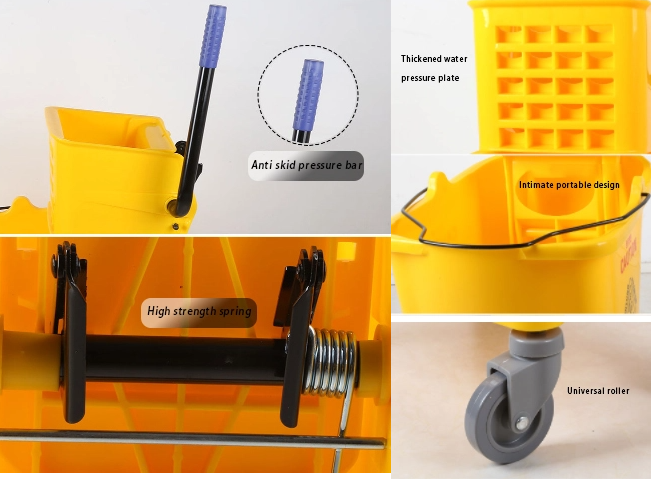
Before you begin cleaning, take a moment to understand the equipment in your hands. A mop bucket with a wringer is designed to improve your cleaning efficiency, but only if you know how each part works together .
Key components to familiarize yourself with:
Bucket: Holds your cleaning water or detergent mixture. It may come as a single or dual-chamber system
Wringer: The mechanism that squeezes excess water from your mop head—available in side-press, down-press, or funnel-style designs
Handle/Lever: Used to operate the wringer; a smooth action saves effort during long cleaning sessions
Casters/Wheels: Enable easy movement across large floor areas without lifting heavy buckets
Divider (for dual models): Keeps clean and dirty water separate for better hygiene
Pro Tip: For large or high-traffic areas, always use a dual-chamber mop bucket—it prevents dirty water from contaminating freshly cleaned floors .
Your cleaning solution determines how effectively dirt and grime lift off the surface. Using the wrong concentration can cause streaks or sticky residues, so getting this part right saves both time and effort .
Check your floor type – Use a neutral cleaner for wood, mild detergent for tile or vinyl, and degreaser for industrial floors
Fill the bucket properly – Fill to a maximum of 2/3 full with warm water (not hot, as it can damage certain finishes) . This prevents dirty water from slopping over the sides when you place the mop into the water
Add cleaning solution – Follow the label instructions for the correct amount
Stir gently – Distribute the cleaner evenly through the water
Avoid overfilling – Too much water causes splashing when wringing
Pro Tip: Always use clean, fresh water. Reusing leftover solution can spread bacteria or leave dull spots on shiny floors .
A smart setup ensures smooth, uninterrupted cleaning. Preparing your space before mopping prevents you from dragging the bucket across obstacles or stepping on freshly cleaned areas .
Remove chairs, rugs, and small furniture
Place "Wet Floor" signs in visible spots for safety
Position your bucket near the starting point but out of your walking path
Lock the caster wheels (if equipped)
Ensure your mop head is firmly attached and clean before dipping
Pro Tip: Always start mopping from the farthest corner and move toward the exit—this keeps your work clean and prevents tracking wet footprints across the floor .
The wringer is your best friend—if used correctly. The goal is to achieve a mop that's damp enough to clean effectively but not so wet that it leaves puddles or streaks .
Submerge the mop head fully in your cleaning solution
Lift it out and let excess liquid drain back into the bucket for a few moments
Place it into the wringer compartment, ensuring all fibers are inside the wringer
Activate the wringer mechanism:
For down-press wringers: Press the handle down slowly and steadily . Fast, jerky motions can cause splashes or strain the mechanism
For side-press wringers: Push the lever forward to compress the mop head
For funnel-type wringers: Twist the mop within the funnel until you achieve the desired dampness
When you lift the mop, it should be damp, not dripping
Pro Tip: For heavy-duty cleaning, down-press wringers are the top choice—they remove more water with less physical effort, helping your floors dry faster .
The way you mop determines how clean—and how safe—your floors will be. A poor technique can leave streaks or even spread dirt, while a correct one ensures a uniform finish .
Divide your floor into sections of around 5×5 feet for better control
Use a figure-eight or "S" motion to cover each area evenly
Overlap your passes slightly to prevent missed spots
Rinse and wring after each section to maintain water quality
Avoid flooding the floor—damp cleaning gives the best shine
For stubborn or greasy patches, apply a little extra pressure on the mop head and go over the area twice .
One of the biggest mistakes in mopping is reusing dirty water. It's like washing your face with muddy water—pointless. Separation ensures that dirt gets lifted and not re-deposited .
If you're using a dual-bucket system, dedicate one side for clean water and the other for dirty rinse water
For single-bucket models, empty and refill after every 100–150 square feet of cleaning
Monitor the water color—once it looks cloudy, it's time for a change
Never top up dirty water with fresh water—replace it entirely
Pro Tip: Add a dash of disinfectant to your rinse water when cleaning bathrooms or kitchens to minimize bacterial transfer .
Not all wringers are created equal. Understanding how to handle your specific model helps you maintain consistent dampness without extra effort throughout your cleaning session .
If you're using a self-wringing mop (with the wringer built into the handle), the technique differs slightly:
Release the locking mechanism by pushing the handle down
Immerse the mop fibers in water and let them soak sufficiently
To wring out: Lift the handle and turn it 3-4 times counterclockwise, or hold the handle tight and turn the stick clockwise
The locking mechanism engages and squeezes the fibers completely
Your mop bucket and wringer work hard—reward them with proper cleaning. Neglecting maintenance can lead to foul odors, rust, or even equipment failure .
Empty all dirty water as soon as you finish cleaning
Rinse the bucket and wringer thoroughly with clean water
Clean with disinfectant from time to time to prevent scum buildup and foul smells
Wring out the mop and hang it to dry completely
Do not leave a wet mop in the wringer basket—it can promote rust on metal components
Allow everything to air-dry before storing
Store equipment in a dry, well-ventilated space
Pro Tip: Once a week, sanitize your entire setup using diluted bleach (1 part bleach to 10 parts water) to keep mold and bacteria away .
Even good equipment can act up. Here's how to fix the most common issues :
| Problem | Likely Cause | Solution |
|---|---|---|
| Mop leaves streaks | Too much detergent or water | Wring better and dilute solution properly |
| Wringer jammed | Tangled mop fibers or debris | Clean out debris using a small brush |
| Bad odor | Wet storage | Dry everything thoroughly after each use |
| Wheels squeaking | Dirt buildup | Remove dirt and apply light silicone spray |
| Rust on metal parts | Moisture exposure | Wipe dry after every wash; never store in damp areas |
Pro Tip: Keep a small cleaning kit (brush, disinfectant, and lubricant) near your mop station—it saves hours of maintenance later .
Mastering a mop bucket with a wringer transforms your cleaning routine from a chore into an efficient, satisfying process. Whether you're maintaining a busy workplace or keeping your own home pristine, having the right tools and using them correctly is key to achieving professional results .
Remember these essential takeaways:
Preparation matters – Choose the right cleaning solution and set up your workspace properly
Wring correctly – The goal is a damp mop, not a soaking wet one
Work systematically – Start from the farthest corner and move toward the exit
Keep water separate – Use a dual-bucket system or change water frequently
Clean your equipment – Proper maintenance extends tool life and ensures hygiene
By following this step-by-step guide, you'll not only achieve cleaner floors but also extend the life of your cleaning equipment. Happy mopping!